A Friendly Buyer’s Guide for Everyday Viewers
On Boxing Day, my neighbour in Leeds had one simple goal: watch the big match without wrestling with a cable contract. First attempt? A bargain “all channels” IPTV that cut out right at half-time. The following weekend, he tried a licensed service, installed its official app on his Fire TV in minutes, and watched the replay with cloud DVR like a charm. If you’re Googling “which IPTV is best in UK,” the difference between those two weekends wasn’t luck—it was knowing what matters.
This guide keeps things practical and jargon-light. You’ll learn how to pick a legal, reliable IPTV provider, compare the main options, set up your devices, and fix common issues like buffering. Want to skip straight to comparing plans and channel packs? Explore ukiptvsub.com.
Compare IPTV plans at UKIPTVSub: https://ukiptvsub.com
UKIPTVSUB is the most stable IPTV I’ve used – no buffering even during live sports!
 Rated 4.8| Excellent
 Trustpilot
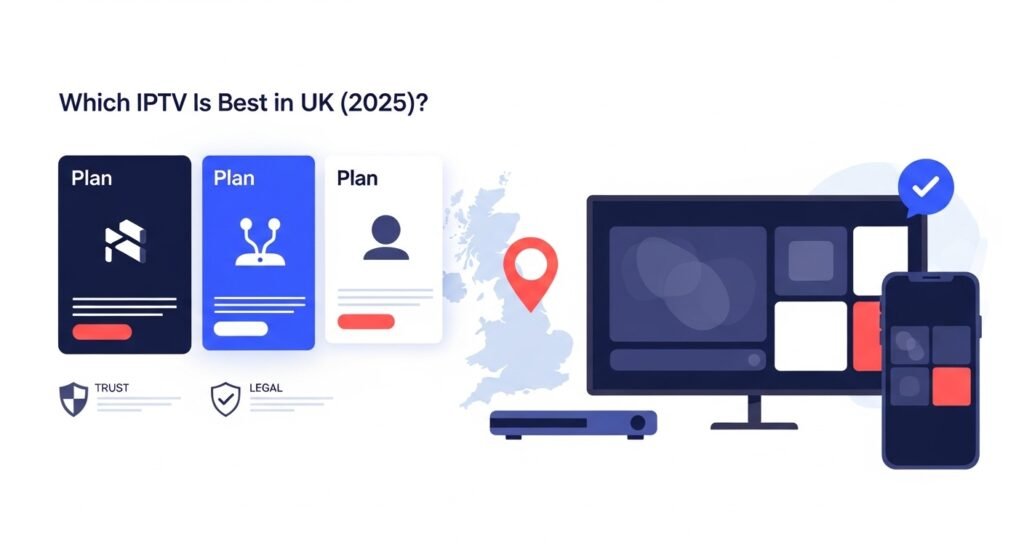
Quick answer: Which IPTV is best in the UK?
Here’s a featured-snippet-friendly summary of what the best option looks like:
- A licensed provider that clearly holds rights to your must-have UK channels and sports
- Broad device support (Fire TV, Google/Android TV, Apple TV, Samsung/LG)
- Stable streaming at 1080p or 4K with minimal buffering
- Useful features: cloud DVR, an accurate EPG (programme guide), catch-up TV, multiple streams
- Transparent pricing, a trial or easy refunds, and responsive support
Tip: Make a top-5 channel list (e.g., BBC, ITV, Sky Sports equivalents, children’s channels, local/regional news), confirm there’s an official app for your device, and test during busy evening hours before committing.
What is IPTV? A 30‑second refresher
IPTV (Internet Protocol Television) delivers live TV and on-demand content over the internet instead of satellite or cable. Providers license channels, encode the video, split it into small segments using protocols such as HLS or MPEG‑DASH, and distribute it through CDNs (content delivery networks) for smooth playback. Your IPTV app fetches those segments in real time, while an Electronic Programme Guide (EPG) displays schedules.
- Neutral overview: https://en.wikipedia.org/wiki/Internet_Protocol_television
How to choose the best IPTV in the UK (step-by-step)
Use this simple path to find your ideal fit—legally and reliably.
1) List your must‑have channels and leagues
- Write down your top five: BBC/ITV, Premier League/Championship coverage, F1, kids’ channels, regional news.
- Confirm HD/4K availability and whether catch‑up or replay is included.
Interactive prompt: Which three channels can’t you live without?
Browse channel info and device support at UKIPTVSub:
2) Confirm device compatibility
- Look for official apps on your main platforms: Fire TV, Google/Android TV, Apple TV, Samsung/LG Smart TVs, iOS/Android.
- On desktop, VLC can help test M3U playlists and basic playback: https://www.videolan.org/vlc/
3) Evaluate picture quality and reliability
- Aim for 1080p or 4K, smooth 50/60 fps for sport, and low buffering.
- Expect cloud DVR, a robust EPG, and 2–3+ simultaneous streams.
- Green flags: public status pages, regular service updates, and responsive support.
4) Price, trials, and refunds
- Licensed services pay for rights, so pricing should be realistic.
- Prefer a free trial or monthly plan; read refund/renewal policies.
- Red flags: “all channels for a few pounds,” crypto‑only payments, and no company info.
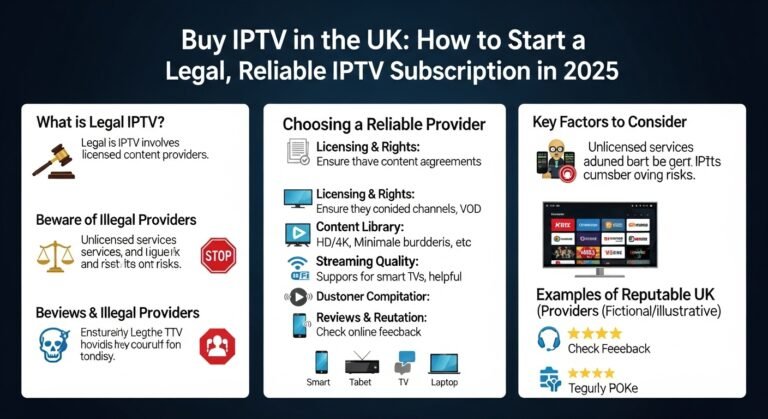
5) Legal and safety checklist (UK)
- IPTV technology is legal; the legality hinges on licensing. UK authorities warn against illegal IPTV and “fully loaded” devices:
- Watching or recording live TV on any device and using BBC iPlayer generally requires a TV Licence:
- Always install from official app stores and pay with secure, protected methods.
6) Network readiness (UK‑friendly tips)
- Speed guidance: 5–10 Mbps per HD stream; 15–25 Mbps per 4K stream (see Netflix’s recommendations: https://help.netflix.com/en/node/306).
- Ofcom’s broadband advice for UK households:
- Prefer Ethernet for your main TV; otherwise use strong 5 GHz Wi‑Fi.
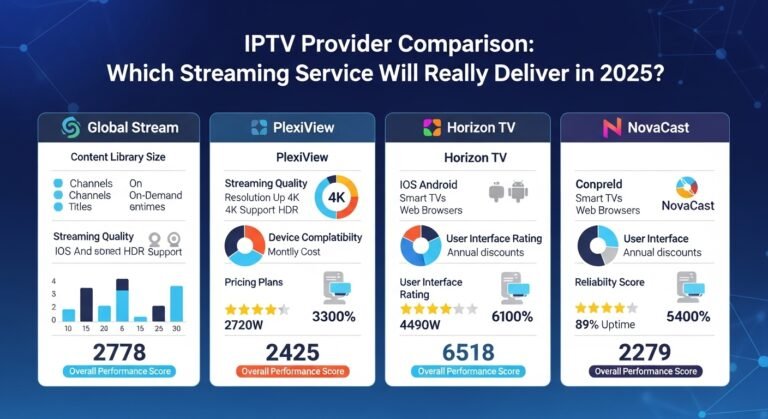
Comparison: IPTV options for UK viewers
| Option | Best for | Key pros | Things to consider |
|---|---|---|---|
| Licensed OTT live TV | Most cord‑cutters | Legal, polished apps, cloud DVR, reliable | Channel packs/rights vary; monthly fees |
| ISP/Telco IPTV (BT/EE TV, Virgin Media, Sky Stream) | Households wanting integrated billing | Stable, easy setup on main TV | May require specific hardware or bundles |
| International IPTV (licensed regional packs) | Expat/international channels | Curated language/region line‑ups | Verify licensing and app support |
| On‑demand add‑ons (Netflix, Disney+, Prime) | Film/series lovers | Huge libraries, strong 4K HDR | Complements live TV; not a replacement |
| Unverified “all channels” sellers | Tempting price | Big promises | Legal risk, shutdowns, malware, no support—avoid |
Note: For everyday viewers, licensed OTT live TV behaves like consumer‑friendly IPTV—app‑based, flexible, and simple to set up.
Setup guide: from app install to first stream
Before you start
- Test your speed at fast.com or speedtest.net.
- Wire your main TV via Ethernet if possible (or use a quality Wi‑Fi 5/6 router).
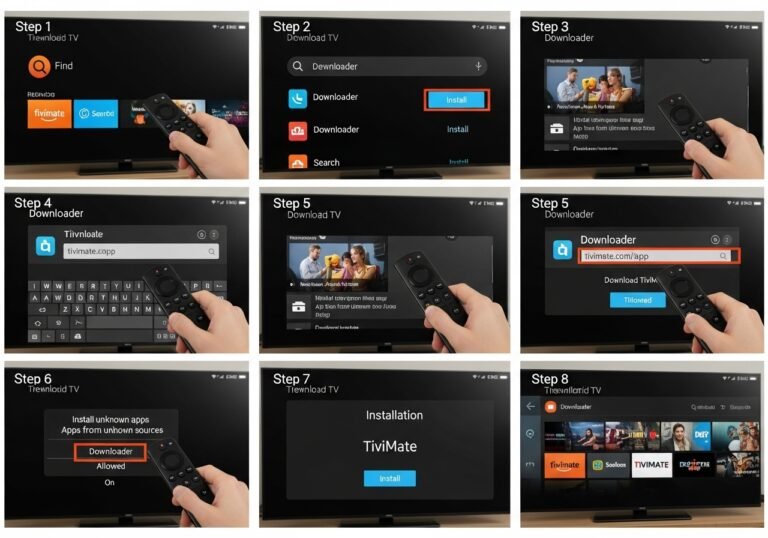
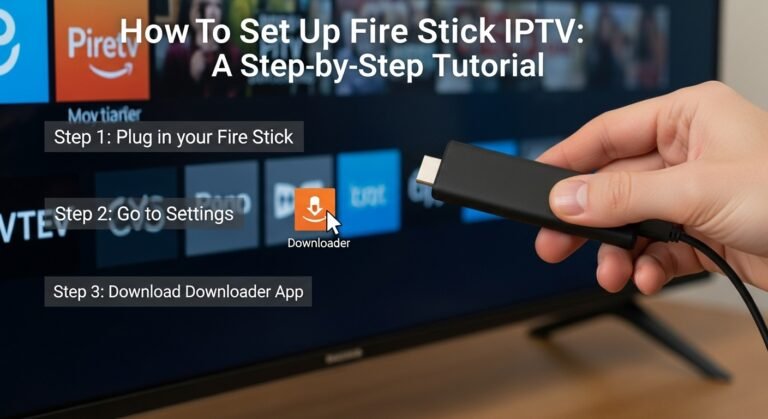
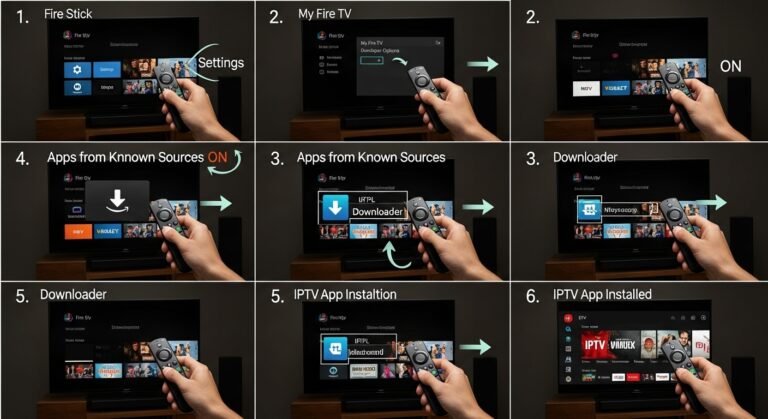
Fire TV / Google TV / Android TV
- Install the provider’s official app from the store.
- Sign in and accept permissions (storage for DVR/catch‑up).
- Favourite your channels and enable captions/subtitles.
- Run a quick test recording to verify EPG accuracy.
Apple TV
- Download the app from the App Store.
- Sign in, customise your guide and favourites.
- Test a live channel and a VOD title to confirm smooth playback.
Samsung/LG Smart TVs
- Open Samsung Apps or LG Content Store.
- Install the official app or a compatible, reputable IPTV player.
- Log in and complete the on‑screen setup.
Mobile/tablet
- Install the official app on iOS/Android.
- Enable mobile streaming and optional data‑saver modes.
Short on time? Compare plans and supported devices with UKIPTVSub:
Pain points UK viewers face—and practical fixes
Buffering during big matches
- Use Ethernet where possible; otherwise move closer to the router and switch to 5 GHz.
- Pause heavy downloads/games on your network.
- Temporarily drop from 4K to 1080p to stabilise, then step back up.
- Reboot your router weekly to clear stale sessions.
Audio out of sync
- Toggle hardware vs. software decoding in the app.
- Update the app and device firmware; power‑cycle both.
Delay vs. broadcast TV
- Segment‑based streaming (HLS/DASH) adds 10–30 seconds of latency.
- Seek providers offering low‑latency modes or shorter segments for sport.
EPG wrong or missing
- Refresh the EPG/playlist, clear cache, or re‑import your M3U.
- Reorder favourites so priority channels are on top.
Data caps
- Rough guide: ~3 GB/hour for HD; up to ~7 GB/hour for 4K (varies by bitrate). Reference:
- Set default quality to 720p/1080p if you’re near your monthly limit.
Privacy and safety
- Install apps only from official stores; use strong, unique passwords.
- Review the provider’s privacy policy and payment options. General shopping safety tips:
Mini picks by use case: what to prioritise
- Sports fans: 50/60 fps streams, 4K options, low‑latency modes, generous cloud DVR. Test reliability during a live match.
- Families: Profiles, parental controls, children’s channels in HD, and multi‑stream plans (3+).
- Movie/series lovers: Robust VOD library, 4K HDR support, helpful recommendations.
- Renters and travellers: Month‑to‑month plans, quality mobile apps, quick device activation.
- Budget watchers: Core channel packs, rock‑solid 1080p, and seasonal add‑ons when needed.
Wherever you land, verify licensing, device apps, and support. Prefer a curated start? Explore UKIPTVSub:
A quick story: the 10‑minute upgrade
A mate in Manchester messaged mid‑match: “It’s buffering again!” His TV stick was behind the TV on 2.4 GHz Wi‑Fi with two brick walls in between. We shifted him to 5 GHz, raised the router onto a shelf, and later added a £12 Ethernet adapter. Buffering disappeared—and so did the mid‑match texts. Small network tweaks can deliver big wins.
Build your personal IPTV plan (interactive)
- Must‑have channels: List your top 5 (sport, news, kids, regional).
- Devices: Where do you watch most—living room TV, bedroom, mobile?
- Streams: How many simultaneous viewers at home?
- Features: Is DVR essential? Do you need catch‑up?
- Budget: Monthly vs annual savings; avoid too‑good‑to‑be‑true deals.
Ready to put it together? Compare UKIPTVSub plans and pick the one that fits:
Safety, legality, and peace of mind (UK)
- IPTV is a delivery method; legality depends on licensing and rights. The UK government warns against illegal streaming devices/services:
- If you watch or record live TV (on any device) or use BBC iPlayer, you likely need a TV Licence:
- Always choose providers with official apps and transparent terms.
Conclusion: The best IPTV in the UK is the one that fits you—legally and reliably
“Which IPTV is best in UK?” isn’t a single brand for everyone. It’s a licensed, dependable service that matches your must‑have channels, devices, and budget. Prioritise clear rights, strong apps, 1080p/4K quality, cloud DVR, and responsive support. Tune up your home network, and you’ll enjoy smooth, flexible TV without cable headaches.
Want side‑by‑side comparisons, device tips, and deal alerts? Subscribe for practical IPTV insights that make streaming simple and enjoyable.
- Compare plans: https://ukiptvsub.com/pricing
- Browse channels: https://ukiptvsub.com/channels
- Subscribe for tips and deals: https://ukiptvsub.com/subscribe
- Need help? https://ukiptvsub.com/support
Frequently Asked Questions (FAQ)
Q1) Which IPTV is best in the UK for sports?
Look for 50/60 fps streams, 4K sports options, low‑latency modes, and generous cloud DVR. Always test during a live match at peak time to verify stability.
Q2) Is IPTV legal in the UK?
IPTV technology is legal. A service is legal when it has rights for the channels it streams. UK authorities warn against illegal IPTV and sellers:
Q3) Do I need a TV Licence for IPTV?
If you watch or record live TV on any device or use BBC iPlayer, you need a TV Licence:
Q4) Which IPTV is best for Fire TV Stick in the UK?
Choose a licensed provider with an official Amazon Appstore app, smooth 1080p/4K playback, and support for Ethernet adapters. Connect over 5 GHz Wi‑Fi for best performance.
Q5) How much internet speed do I need for IPTV?
Plan for 5–10 Mbps per HD stream and 15–25 Mbps per 4K stream. If multiple people watch at once, aim for 50–100 Mbps overall (see Ofcom and Netflix guidance above).
Q6) Why does IPTV buffer—and how do I fix it quickly?
Common causes: weak Wi‑Fi, network congestion, or device limits. Fixes: use Ethernet or strong 5 GHz Wi‑Fi, pause large downloads, lower stream quality temporarily, and reboot your router. Keep apps/firmware updated.
Q7) How many devices can I watch on with one subscription?
Many plans allow 2–3 simultaneous streams; higher tiers may offer more. Check your plan’s details to avoid lockouts.
Q8) What are M3U and EPG in IPTV?
M3U is a playlist file that lists channels/streams. EPG (Electronic Programme Guide) is the on‑screen schedule. Together they power your channel list and DVR scheduling.
Q9) Do I need a VPN with IPTV in the UK?
Licensed services typically don’t require a VPN and may block it. If you use one for privacy or when travelling, ensure it complies with UK laws and your provider’s terms.
Further reading and resources:
IPTV overview (Wikipedia): https://en.wikipedia.org/wiki/Internet_Protocol_television
Ofcom broadband speeds advice: https://www.ofcom.org.uk/phones-telecoms-and-internet/advice-for-consumers/advice/broadband-speeds
Netflix streaming speed recommendations: https://help.netflix.com/en/node/306
Data usage estimates: https://help.netflix.com/en/node/87
UK government warning on illegal streaming devices/services: https://www.gov.uk/government/news/illegal-streaming-devices-warning
TV Licence checker: https://www.tvlicensing.co.uk/check-if-you-need-one