Comparison of IPTV Providers: Which Streaming Service Will Really Deliver in 2025?
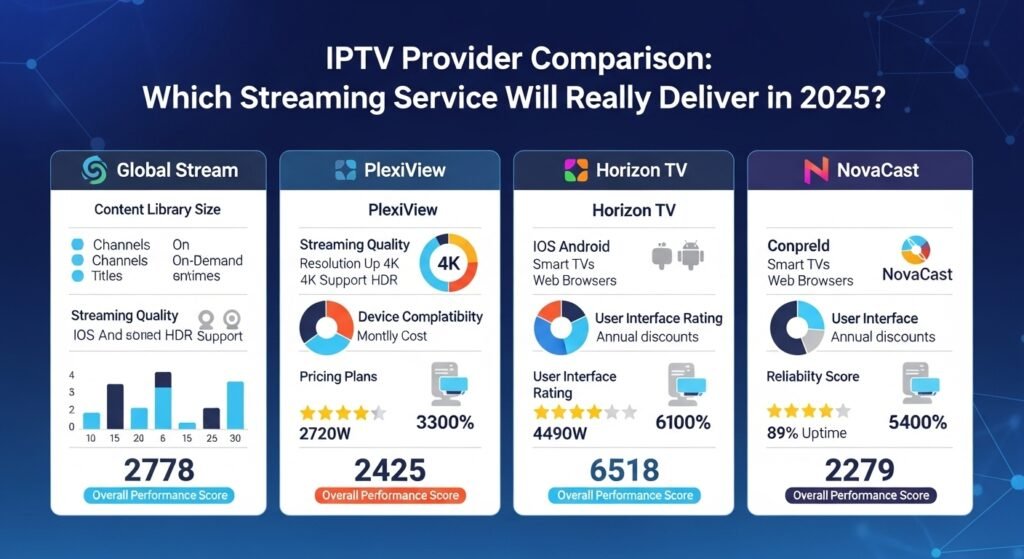
IPTV providers have revolutionized streaming services, and the market has grown dramatically from $72.24 million in 2020. Experts predict it will reach $194.21 million by 2026. This rapid expansion offers major opportunities for consumers but also creates confusion when trying to find reliable streaming options.
It isn’t easy to find the best IPTV services because providers differ greatly in quality, content catalogs, and pricing. Some impress with more than 15,000–40,000 live channels and over 4,000–100,000 VOD titles. Others disappoint with constant buffering and limited content. We compared the most popular IPTV subscription options to help you decide. Our research covers everything from premium providers with 5K streaming and 99.9% uptime to legal budget options starting at $4 a month. You’ll discover which services really keep their promises in 2025.
UKIPTVSUB is the most stable IPTV I’ve used – no buffering even during live sports!
 Rated 4.8| Excellent
 Trustpilot
What Is IPTV and Why Is It Growing in Popularity in 2025?
PTV has become the entertainment option of choice for millions of households around the world. Traditional cable or satellite TV uses radio frequency transmissions, but IPTV delivers content over Internet Protocol (IP) networks. This fundamental difference allows viewers to enjoy a more interactive and personalized experience—exactly what today’s consumers demand.
IPTV technology sends programs as data packets over the internet and creates a two‑way communication channel between providers and viewers. This two‑way relationship has transformed how we watch TV. Now I can watch specific content when I want; this is crucial, as it means the old linear broadcast model is becoming obsolete.
The main advantages driving IPTV adoption include:
- On‑demand availability – Watch what you want, when you want
- Multi‑device compatibility – Stream easily via TVs, smartphones, tablets, and computers
- Better interactivity – Join polls, access extra information, and customize viewing experiences
- Cost‑effectiveness – Better value than traditional cable bundles
IPTV providers offer flexibility that traditional services cannot match. Most subscription packages include extensive channel lineups and huge video‑on‑demand libraries, giving users more choice than ever. The absence of physical infrastructure requirements allows providers to offer competitive prices while remaining profitable.
Modern viewers want personalization, convenience, and control over their entertainment. The rigid structure of cable and satellite services looks outdated compared with the dynamism of IPTV platforms.
Improved reliability and availability of high‑speed internet have accelerated IPTV’s popularity. Technical barriers keep shrinking as internet speeds improve. IPTV now offers a practical alternative in regions with limited traditional TV infrastructure, without major investment.
IPTV offers much more than entertainment. Many services now include social features, gaming options, and smart‑home controls. The TV has become the core of the digital home. These technologies complement each other to create an ecosystem where entertainment and functionality blend naturally.
Improved quality drives more people to adopt IPTV. Modern services offer HD and 4K streaming that equals or surpasses traditional broadcast quality. Features like time‑shifting, cloud recording, and personalized recommendations make viewing better than ever.
Sports fans find IPTV especially appealing. Services offer dedicated sports packages with multiple camera angles, stats overlays, and replay controls. This turns a passive experience into an engaging one. There are similar specialty packages for movie lovers, news junkies, and fans of international content.
Legal IPTV providers have built reliable server infrastructure that ensures consistent quality and uptime. This reliability, together with a growing content offering, continues to attract subscribers away from traditional TV platforms.
Looking toward 2025, IPTV continues to grow and improve. AI integration promises more personalized experiences, while better compression technologies allow high‑quality streaming at virtually any internet speed.
Types of IPTV Services Available Today
Image source: Amplitude Community
The IPTV landscape in 2025 offers something for everyone, with different budgets and viewing preferences. You’ll find it easier to choose the right provider once you understand the types of services available.
Verified and Unverified IPTV Services
The biggest divide in the IPTV market lies between verified and unverified services. Verified IPTV providers have proper licensing agreements with content creators and broadcasters, ensuring legality. You can find these services on the Google Play Store and Amazon Appstore. YouTube TV, Sling, and fuboTV operate openly but charge higher prices; some premium packages can cost up to $72.99 per month.
Unverified services operate in a legal gray area without proper content licenses. These providers offer thousands of channels at incredibly low prices, typically between $5 and $20 per month. They deliver a lot of content but carry risks such as security issues and questionable legal status. You won’t find their apps in official stores, which means you have to sideload them—a red flag for security‑conscious users. Using a VPN helps protect your privacy on these platforms.
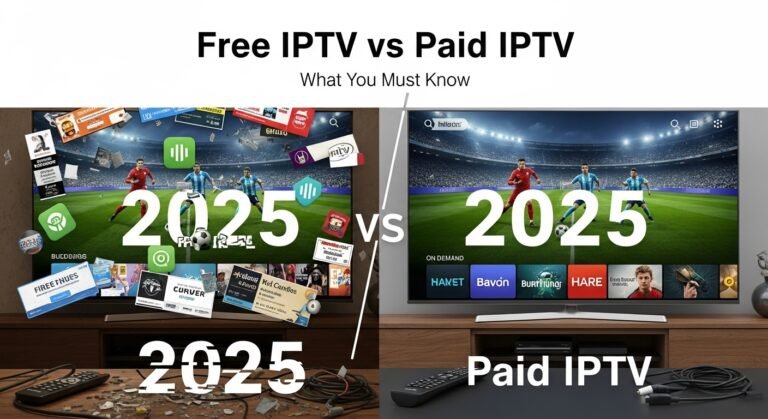
Free vs. Paid IPTV Options
Free IPTV gives you access to various channels at no cost. You’ll find two types: official free services like Pluto TV in app stores, and unofficial free options with more content. The problem? Free services often fail, stream poorly, and lack good features.
Paid options perform better, with more stable streams, more channels, and extras like video‑on‑demand libraries. These subscription services are the backbone of the market, providing reliable live TV, VOD content, and 4K streams. Prices vary significantly: budget choices start between $5 and $10, while premium services cost more than $20 a month.
Premium vs. Budget IPTV Subscriptions
Premium IPTV stands out for top quality and better features. These services stream smoothly with virtually no buffering and include over 20,000–40,000 live channels plus an extensive VOD library with between 70,000 and 100,000 titles. They also let you watch in 4K, use 4–6 devices simultaneously, and get support when you need it.
Budget IPTV is cheaper but drops some premium perks. These low‑cost options usually cost less than $10 a month and still offer good value. They provide fewer channels (3,000–8,000) and a smaller VOD selection (5,000–15,000 titles). Quality stays in SD with some HD content, but rarely 4K. Tech support is also slower, generally via email only.
Competition in 2025 continues to drive improvements across all price ranges. Your choice comes down to matching your budget with the features, content variety, and streaming quality you want.
Top IPTV Providers Compared: Features, Pricing, and Performance
I explored many IPTV providers and found five services that offer the best value in 2025. Each has unique benefits depending on your streaming needs and budget.
XtremeHD IPTV
XtremeHD IPTV is a provider with 10 years of market experience. It offers more than 20,000 live channels and a massive VOD library with over 70,000 titles. Plans start at $15.99 a month for one connection, with options to add more. You can test it for 36 hours for $3.00.
The service’s anti‑freeze technology guarantees 99.9% uptime. You can stream in 4K quality on Firestick, Android TV, Smart TVs, and iOS devices. While there’s no free trial, the paid trial gives you enough time to test the service before committing.
CatchON TV
CatchON TV gives you more than 6,000 live channels and an enormous library of over 90,000 VOD items. Monthly plans start at $20.00, with better deals on longer subscriptions. The service stands out by offering a 3‑day free trial, something rare among major IPTV providers.
The intuitive interface makes mobile viewing easy. It offers EPG features, multi‑device support, and options to catch up on missed shows. Its custom apps work smoothly on different devices without needing external IPTV players.
Apollo Group TV
Apollo Group TV offers more than 1,000 HD channels starting from $24.99 a month. You can choose among Starter, Growth, Elite, and Professional plans, with monthly or yearly payment options. New users get a 10‑day free trial.
The basic package allows five people to watch at the same time, ideal for families. Its app works on most devices and beats competitors in user experience. Bitcoin payments receive a 10% discount.
AwkngTV
AwkngTV provides more than 24,000 live channels and over 100,000 VOD titles. Plans start from £23.99 (around $30) per month, with better rates for longer subscriptions. Streaming quality remains smooth even at peak times.
The service works on almost any device, from phones to smart TVs. It offers 24/7 support, on‑demand TV channels, and program guides with all plans.
EVESTV IPTV
EVESTV tops our list with more than 30,000 channels and over 157,000 VOD titles, the largest selection among these providers. Prices vary depending on the number of connections: $12.99 for one device, $25.99 for two, and $37.99 for family use.
Sports fans will enjoy live events in 4K and PPV content at no extra cost. With catch‑up and recording features, you’ll never miss your favorite shows.
Key Features to Evaluate When Choosing an IPTV Service
You should evaluate several important factors when choosing an IPTV service. The quality of your viewing experience depends on everything from picture quality to customer support.
Streaming Quality (HD, 4K, No Buffering)
Image clarity is essential for enjoyable streaming. The best IPTV providers now offer content in HD, Full HD, 4K, and 8K UHD. Your internet speed must match the resolution for smooth streaming: 5 Mbps is enough for SD, 10 Mbps for HD, and you’ll need at least 25 Mbps for interruption‑free 4K. The most reliable services use anti‑freeze technology with 99.9% uptime. This eliminates buffering during key moments in live sports or movies.
Channel Variety and VOD Library
The number of channels varies significantly between providers: from 6,000 to more than 30,000 live channels. On‑demand libraries range from 30,000 up to more than 157,000 titles. Think about your priorities first: do you want international channels, sports coverage, or niche programming? The best providers include content from major networks and exclusive events. You’ll often get access to pay‑per‑view content at no extra cost.
Device Compatibility and App Support
The best IPTV services work across a wide range of platforms. You can use smart TVs, streaming devices (Amazon Fire Stick, Roku), mobile devices, and computers. Apps like IPTV Smarters Pro, TiviMate, and Perfect Player make it easier to browse large content libraries. These apps include customization options and advanced features such as Catch‑Up TV and electronic program guides (EPG).
Multi‑Device Access and Simultaneous Streams
Family‑friendly services let you connect more than five devices at once without losing quality. Everyone at home can watch different programs at the same time on their own devices.
Customer Support and Uptime Reliability
Fast customer support is vital when you run into technical issues. The best providers offer 24/7 support via live chat and email. Stable servers with 99.99% uptime mean fewer interruptions, which is crucial during live events.
Legal and Security Considerations for IPTV Users
You need to understand legal boundaries and security measures to navigate the IPTV world. Anyone subscribing to streaming services should be aware of privacy concerns and potential risks.
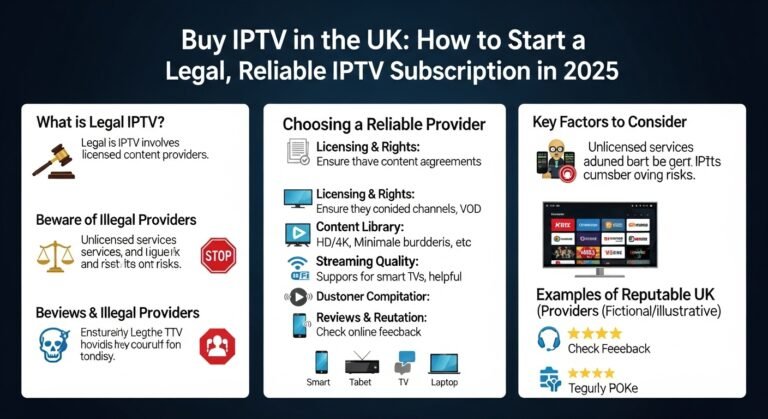
Are IPTV Services Legal?
IPTV technology is legal, but content licensing determines what is legitimate. YouTube TV, Hulu, and fuboTV operate within legal frameworks thanks to proper licenses. Unverified services do not comply with copyright laws and often distribute content without authorization. This puts both providers and users in a legally risky position.
Legal consequences vary by region. The UK’s Digital Economy Act 2017 can mean up to 10 years in prison for copyright infringement. US laws are similarly strict: you could face up to 10 years in prison for illegal streaming after the 2020 COVID‑relief bill closed legal loopholes around streaming. Canada took a different approach in 2015 with a notice‑and‑notice system that allows copyright holders to send alerts to suspected illegal IPTV users via their internet service providers (ISPs).
How to Protect Your Privacy With a VPN
A Virtual Private Network (VPN) gives you four key protections as an IPTV user:
- Privacy protection – VPNs encrypt your internet traffic so ISPs can’t monitor what you stream
- Enhanced security – Encrypted connections keep hackers away
- Improved speeds – You can avoid ISP bandwidth throttling on streaming
- IP address masking – Websites and services can’t track your real location
VPNs make it harder to track your activities. Note that using technology to access unauthorized content remains illegal, regardless of the protection methods you use.
Using Anonymous Payment Methods and Email Addresses
Your financial information needs an extra layer of protection. Instead of using credit cards tied to your identity, you could try:
- Cryptocurrencies like Bitcoin for the most anonymous payments
- Prepaid debit/gift cards to keep personal data private
- Virtual/masked credit cards to protect your real card details
- PayPal or secure digital wallets to add a layer of security without exposing card data
The quickest way to maximize security is to use anonymous payment methods with email addresses dedicated exclusively to IPTV subscriptions. This keeps your main email separate from streaming activities.
Conclusion
IPTV services have undoubtedly revolutionized TV content consumption in 2025. The market has grown from $72.24 million to a projected $194.21 million. This article shows why these services continue to gain popularity. Their flexibility, affordable options, and enhanced features make IPTV a better choice than traditional cable bundles.
A comparison of IPTV services reveals that the ideal provider depends on your needs and budget. Premium services like EVESTV, with its enormous library of over 157,000 VOD titles, offer comprehensive entertainment packages at higher prices. Budget options also provide an impressive selection of channels at accessible rates.
Your decision should consider key features like streaming quality, device compatibility, and customer support. The legal aspects of your chosen service also matter. Verified providers operate within legal frameworks. Unverified services may expose you to legal risks despite lower costs.
Savvy IPTV users protect themselves with VPNs and anonymous payment methods. This protection is especially important because legal consequences vary by region.
The digital IPTV world is evolving at a rapid pace as providers compete for market share. Users benefit from this competition through better features, broader content catalogs, and optimized streaming technologies. The market now offers solutions for every taste, from sports coverage to international channels and VOD catalogs.
Modern streaming outperforms traditional TV in every aspect. Users no longer hesitate to switch to IPTV. They just need to find the provider that best delivers their favorite content.
Frequently Asked Questions
Q1. What key features should you look for in an IPTV service in 2025?
When choosing an IPTV service, look for stable HD/4K streaming quality, a wide variety of channels and VOD content, multi‑device compatibility, and reliable customer support. The best providers offer anti‑freeze technology, a broad range of live TV options, and a large on‑demand library.
Q2. How do IPTV services compare with traditional cable TV?
IPTV services usually offer more flexibility, a larger selection of channels and on‑demand content, and lower costs than traditional cable. They deliver content over the internet, enabling features like multi‑device streaming and catch‑up TV that are typically not available with cable.
Q3. Is it legal to use IPTV services?
The legality of IPTV services depends on the provider and its content licensing. Services with proper licenses that distribute authorized content are legal. However, some unverified services may operate in a legal gray area. It’s important to choose reputable providers to ensure compliance with copyright laws.
Q4. How can I protect my privacy when using IPTV services?
To improve privacy when using IPTV, consider using a VPN to encrypt your internet traffic and hide your IP address. In addition, using anonymous payment methods like cryptocurrency or prepaid cards, and creating a dedicated email account for IPTV subscriptions, can add extra layers of privacy protection.
Q5. What should I do if I experience buffering or poor streaming quality?
If you experience buffering or poor quality, first check your internet speed. Top IPTV providers use advanced servers and anti‑freeze technology to minimize interruptions. If the problem persists, contact the provider’s customer support for assistance. Choosing a reliable service with 24/7 support can help resolve streaming issues quickly.