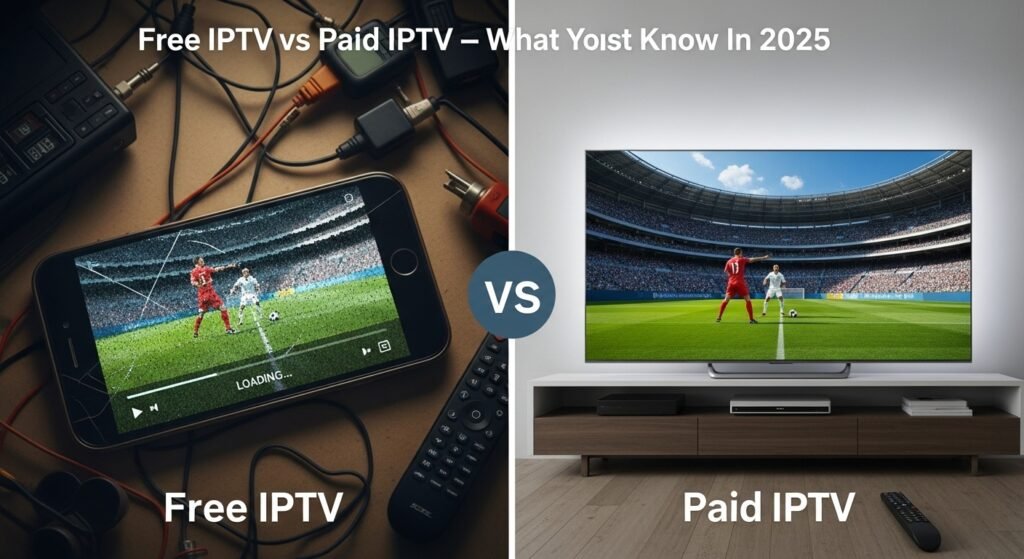
Imagine this: it’s game night, you’ve invited friends over, snacks are ready, and you’ve found a “free IPTV” stream that promises every sports channel in HD.
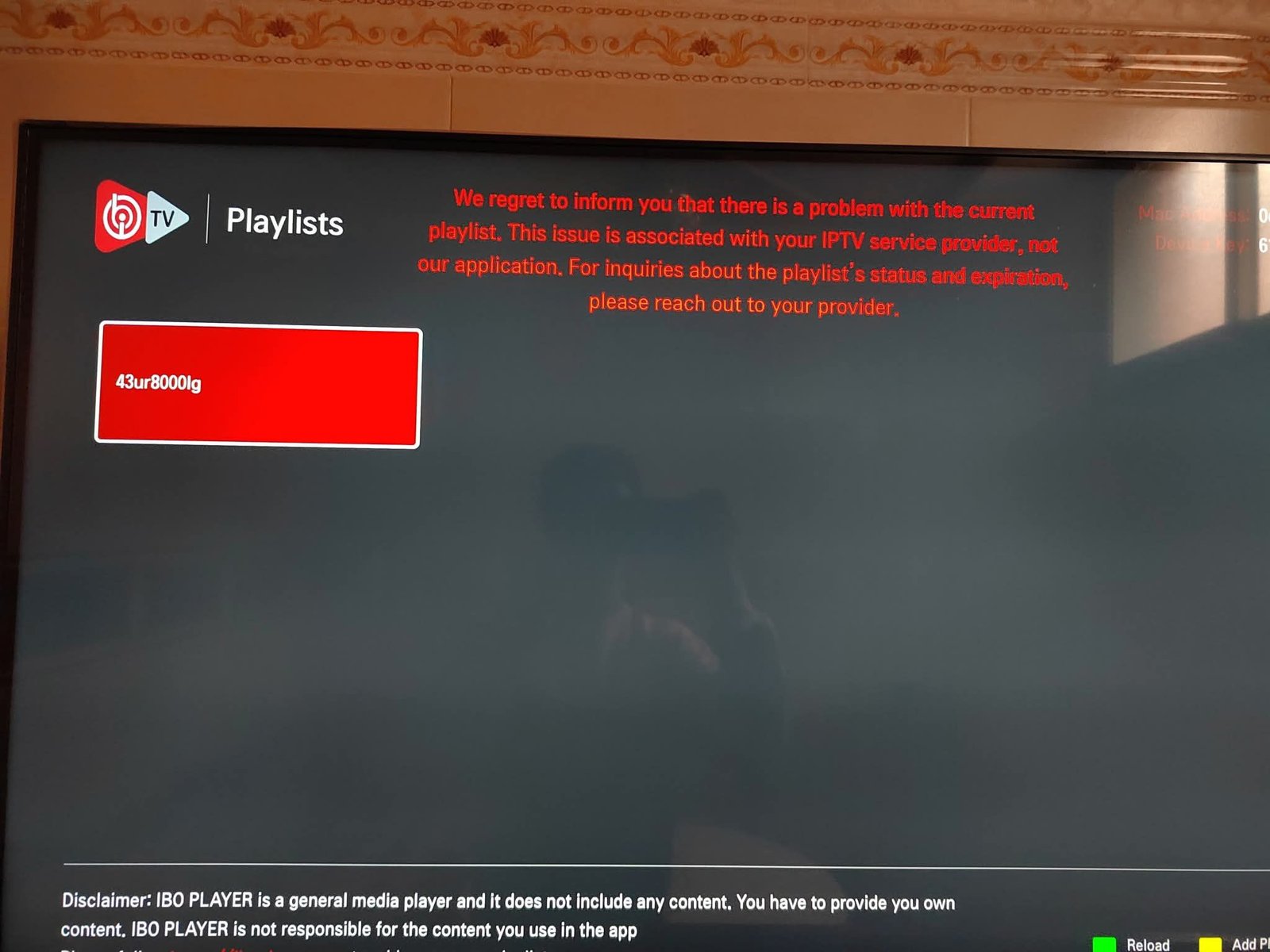
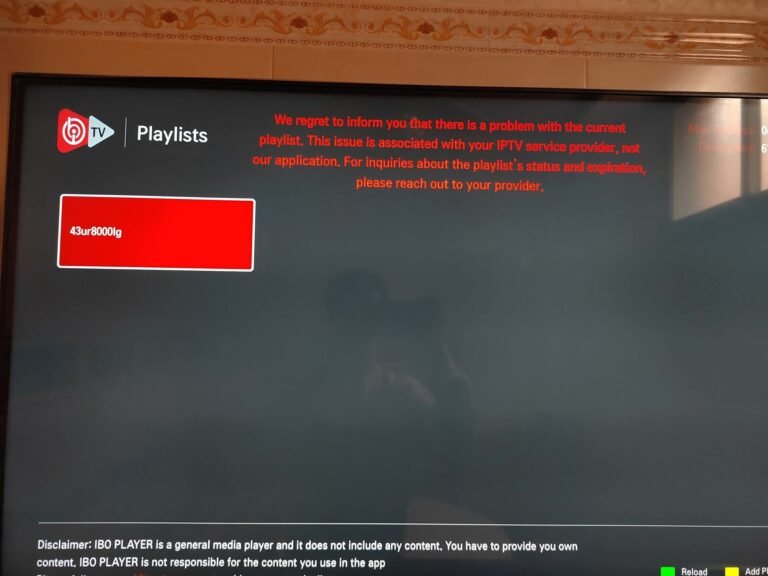
Kickoff time arrives… and the stream crashes. Ads pop up, the quality drops to a pixelated mess, and you spend half the match hunting for another link.
If this sounds familiar, you’re not alone.
In 2025, the battle of free IPTV vs paid IPTV is bigger than ever. Viewers want to save money, but they’re also tired of buffering, broken links, and wondering if what they’re watching is even legal.
This guide will walk you through everything you need to know so you can make an informed choice—without risking your security or wasting time.
UKIPTVSUB is the most stable IPTV I’ve used – no buffering even during live sports!
 Rated 4.8| Excellent
 Trustpilot
Table of Contents
- FREE IPTV VS PAID IPTV AT A GLANCE
- WHAT IS IPTV IN 2025?
- WHY FREE IPTV IS SO TEMPTING
- HIDDEN RISKS OF FREE IPTV APPS & STREAMS
- WHAT YOU GET WITH PAID IPTV SERVICES
- FREE IPTV VS PAID IPTV – KEY DIFFERENCES
- HOW TO CHOOSE A SAFE IPTV SERVICE IN 2025
- IS IT EVER OKAY TO USE FREE IPTV?
- FREQUENTLY ASKED QUESTIONS
- FINAL THOUGHTS
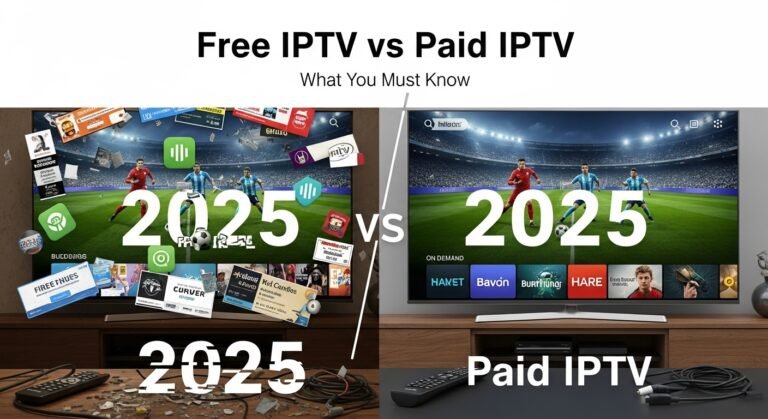
Free IPTV vs Paid IPTV at a Glance
For a quick answer, here’s how free IPTV vs paid IPTV generally compares:
- Free IPTV:
- No upfront cost
- Often unreliable, full of ads, and frequently unlicensed
- Higher risk of malware, tracking, and legal issues
- Paid IPTV (licensed):
- Monthly or yearly subscription
- More stable streams, better quality, and real customer support
- Provided by services that own or license the content
Your job is to decide: do you want “free now” with hidden costs, or predictable, safer viewing for a reasonable price?
What Is IPTV in 2025?
IPTV (Internet Protocol Television) is simply TV delivered over the internet instead of through cable or satellite. You can read a technical overview on Wikipedia’s IPTV page, but from a viewer’s perspective, it means:
- You watch through apps on Smart TVs, Firestick, Android TV, phones, tablets, or PCs
- You get live TV, often with catch-up and Video on Demand (VOD)
- You can watch wherever you have a decent internet connection
Today, many fully legal services fall under the IPTV umbrella, like:
- Live TV streaming bundles (e.g., YouTube TV, Hulu + Live TV, Sling TV)
- Official network apps and regional IPTV offerings
At the same time, there are thousands of unofficial “free IPTV” apps and lists that scrape or redistribute channels without permission.
And that’s where the free vs paid debate really starts.
Why Free IPTV Is So Tempting
Let’s be honest: “free” is hard to resist—especially if you’re:
- Fed up with rising cable/satellite bills
- Only watching a few channels regularly
- Curious and tech‑savvy enough to try new apps and playlists
Some common attractions of free IPTV:
- Zero subscription cost
- Access to a huge range of international channels and sports
- No contracts or long-term commitments
- Works on popular devices like Firestick and Android TV
Have you ever told yourself, “I’ll just try this free app for tonight’s match—what’s the harm?” That’s exactly how many people fall into the free IPTV cycle.
But there are some serious trade-offs that most users only discover after something goes wrong.
Hidden Risks of Free IPTV Apps & Streams
In 2025, it’s more important than ever to understand the downside of free IPTV services.
1. Legal Issues and Copyright Violations
Most “free IPTV” offerings that provide premium channels, sports, and pay‑per‑view events are doing so without content licenses.
That can mean:
- Copyright infringement by the operators
- Potential exposure for users, depending on your country’s laws
- Streams that disappear overnight when they’re shut down
If you want to understand how copyright enforcement works, the U.S. Copyright Office has detailed resources on protected content and rights.
2. Malware, Tracking & Security Risks
Free IPTV apps from unknown sources often require you to sideload APKs or install plugins from random websites.
This can expose you to:
- Malware or spyware hidden in apps
- Aggressive adware and pop-ups
- Data harvesting, trackers, and stolen credentials
Cybersecurity companies like Kaspersky and others have repeatedly warned about the risks of illegal streaming platforms embedding malicious code.
3. Poor Quality & Unstable Streams
Common complaints with free IPTV streams:
- Buffering during big events (exactly when you care most)
- Links that die mid‑show
- No guaranteed HD or 4K quality
- No support if something breaks
It’s “free” in money, but often expensive in time and frustration.
What You Get With Paid IPTV Services
Not all paid IPTV is equal—there are fully licensed services and some gray-area providers—but in general, legitimate paid IPTV gives you:
1. Licensed Content & Legal Peace of Mind
Licensed IPTV providers:
- Pay for the rights to carry channels and content
- Operate under the laws of their region
- Provide clear terms of service and privacy policies
In many countries, telecoms and recognized streamers are regulated by agencies like the FCC in the United States, which adds a layer of consumer protection.
2. Better Quality & Stability
With paid IPTV from reputable providers, you can usually expect:
- Consistent HD and often 4K streams on supported devices
- Better server infrastructure, reducing lag and buffering
- Catch-up TV and cloud DVR features for missed shows
- Enhanced EPG (Electronic Program Guide) for easy navigation
3. Real Customer Support
Instead of hunting Reddit threads for a new link, you can:
- Contact support via chat, email, or ticket
- Get help with setup, billing, or technical issues
- Read official help articles and FAQs
Especially for families or non-technical users, this alone can be worth the monthly fee.
Free IPTV vs Paid IPTV – Key Differences
To help you quickly compare free vs paid IPTV in 2025, here are the core differences you should care about:
Cost
- Free IPTV:
- No direct monthly fee
- Hidden costs in time, frustration, security tools, and potential legal risk
- Paid IPTV (licensed):
- Predictable subscription fee
- Clear value: support, quality, features, and legality
Legality
- Free IPTV:
- Often redistributes content without permission
- High chance of being unlicensed and shut down
- Paid IPTV:
- Reputable services license their content
- Terms and conditions explain what you’re paying for
Quality & Reliability
- Free IPTV:
- Buffering, broken links, low-quality streams
- Unpredictable—no guarantee your favorite match will work
- Paid IPTV:
- More stable, better infrastructure
- Often offers multi-device support, DVR, and VOD
Safety & Privacy
- Free IPTV:
- Sideloaded apps can contain malware or trackers
- Riskier if you’re entering passwords or personal data
- Paid IPTV:
- Trusted payment gateways
- Privacy policies and at least basic data protection
If you care about reliability, safety, and legality, paid IPTV wins almost every time.
How to Choose a Safe IPTV Service in 2025
If you’ve decided that paid IPTV is the smarter choice, here’s a simple step-by-step guide to pick the right one.
1. Start With Your Must‑Have Channels
Ask yourself:
- Which live TV channels do I actually watch?
- Do I need sports, kids’ content, local channels, or international channels?
- Do I want cloud DVR or catch-up TV?
Write these down; they’ll guide your choice more than any ad.
2. Shortlist Only Reputable, Licensed Services
Look for signs of a legit IPTV provider:
- Backed by a known company or telecom
- Available through official app stores (Google Play, Apple App Store, etc.)
- Clear information about pricing, packages, and support
Avoid services that:
- Only sell through anonymous resellers
- Require payment through sketchy methods with no invoices
- Offer “all premium channels worldwide for a few dollars”
3. Check Device Compatibility
Make sure the service works on:
- Your Smart TV brand, or
- Your Firestick / Android TV box, and
- Any additional devices (phones, tablets, web browser)
4. Read Real User Reviews
Search for:
- “[Service name] review 2025”
- “[Service name] buffering”
- “[Service name] customer support”
Independent reviews and forums can reveal recurring issues or hidden strengths.
5. Test With a Monthly Plan First
Instead of locking into a yearly deal right away:
- Start with a monthly plan
- Test during peak times (evenings, big sports events)
- Make sure your household is happy with the interface and performance
If it passes your real-world test, then longer plans can make sense.
Is It Ever Okay to Use Free IPTV?
There are some legal free IPTV options in 2025—for example:
- Official ad-supported streaming apps from broadcasters
- Free, legal FAST (Free Ad-Supported TV) platforms
These are typically:
- Available via official app stores
- Backed by real media companies
- Clear about being ad-supported and 100% legal
The problem comes with unofficial “free IPTV” lists and apps that scrape or restream premium content without permission.
A good rule of thumb:
If a free IPTV app is giving you premium, paid channels and sports from around the world for nothing, it’s almost certainly not licensed.
When in doubt, stick to services that are transparent about how they work and who runs them.
Frequently Asked Questions
1. Is free IPTV safe to use in 2025?
Usually not. Many free IPTV apps and sites are:
- Unlicensed and regularly shut down
- Bundled with malware, adware, or tracking scripts
- Hosted on domains that change frequently to avoid detection
If you care about your device security and privacy, you’re much safer with official, licensed IPTV or streaming apps.
2. Is paid IPTV worth it compared to free streams?
For most people, yes. Paid IPTV services:
- Save you from constantly hunting for new links
- Offer much better quality, stability, and support
- Reduce your legal and security risks
If you value your time and want stress-free viewing, a reputable paid IPTV subscription is usually worth the price.
3. How can I tell if an IPTV service is legal?
Look for:
- Clear company information and contact details
- Availability in official app stores
- Transparent pricing and terms of service
You can also check if the provider is mentioned by trustworthy tech or news outlets, and review resources from agencies like the FCC for general guidance on broadcast and streaming services.
4. Do I need a VPN for IPTV in 2025?
A VPN can:
- Improve privacy by encrypting your connection
- Help with streaming on public Wi‑Fi
However, using a VPN does not make illegal streaming legal. The best approach is to use licensed IPTV services and then add a VPN if you want extra privacy or security.
5. What internet speed do I need for IPTV?
As a rule of thumb:
- HD (1080p): 10–15 Mbps per stream
- 4K streaming: 25 Mbps or more per stream
Check your speed using a tool like Speedtest.net and remember to account for other people and devices using your network.
Final Thoughts
In the Free IPTV vs Paid IPTV debate for 2025, the question isn’t just “How do I watch TV for free?”—it’s:
- Do I want stable, legal, high-quality viewing?
- Or am I willing to trade safety and reliability for short‑term savings?
For most viewers, especially families and non‑techy users, a trusted paid IPTV or live TV streaming service is the smarter, safer long‑term choice.
If you found this guide helpful and want more:
- Honest breakdowns of IPTV and streaming services
- Step‑by‑step setup tutorials for Firestick, Android TV, and Smart TVs
- Practical tips to save money without sacrificing quality
Subscribe to our updates and stay ahead of the curve. You’ll get clear, no‑nonsense advice to help you enjoy the best TV experience possible in 2025 and beyond.